
An Independent Board Member's Insights

Julie Cullivan's Background

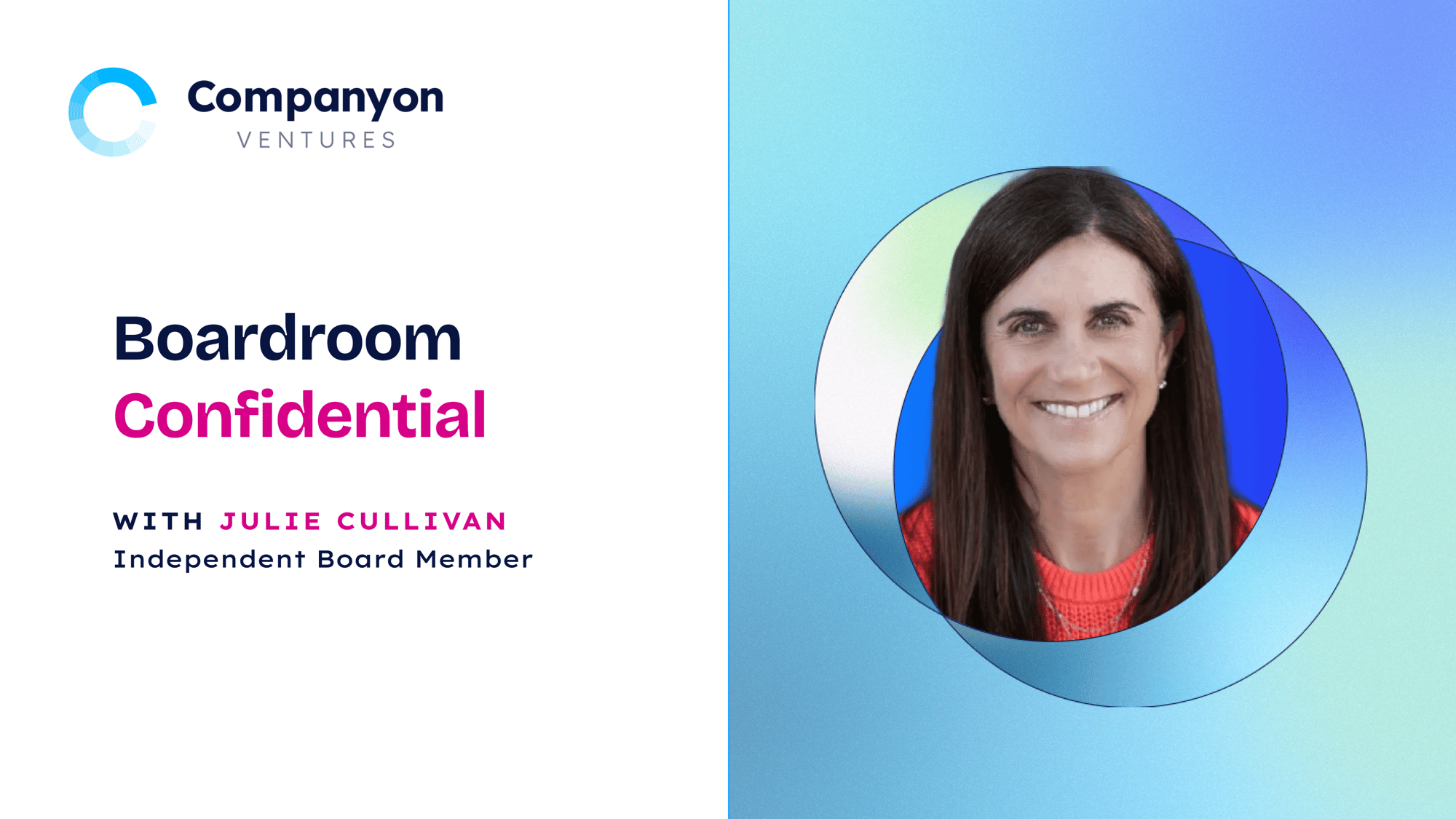
Meet Julie Cullivan — a seasoned tech operator who’s spent 30+ years in the trenches at companies like Oracle, EMC, McAfee, FireEye, and ForeScout. She’s done a bit of everything: go-to-market, finance, CIO, business operations, M&A, sales ops — and helped take multiple companies public along the way.

For the past eight years, Julie has brought that experience into the boardroom, serving on both public and private boards from Series A to late-stage growth. She knows what it takes to scale, where governance actually helps, and how an independent can be a true partner to founders — not just a box to check.


Julie's Insights on Building Your Board

1. Start by Building Trust

Trust is the foundation of every effective board relationship — but it takes work from both sides.  

As a CEO, that means striking the right balance between confidence and vulnerability. The best leaders don’t just present the wins—they bring their board into the hard stuff, too. That’s how you get real value from the people in the room.  

And as a board member, building trust is about showing up as a true partner, not a judge. The most productive conversations often happen outside the boardroom, in the moments when you ask, “What’s really keeping you up at night?” Over time, those open, human moments build the kind of relationship where tough questions feel like support—not scrutiny.


2. Balance Your Board with an Independent

Every great board needs balance — and the independent seat is the secret weapon.

Founders often focus on product, market, and investors when forming their first board, but the independent member can make or break the dynamic. Look for someone who’s not just “experienced,” but who truly understands what it means to be a board member — someone with the networks, context, and scars that will help you level up where you need it most.

In most early-stage companies, that often means go-to-market expertise. Not just a sales leader, but someone who grasps how marketing, operations, and execution all connect. The right independent complements the founding team and helps turn early traction into a repeatable motion.


3. Go Ugly Early - The Operator Rule Every Founder Needs

“Go ugly early” is the operator rule every founder needs in the boardroom.

The CEOs who get the most from their boards pair strong self-confidence with real vulnerability. They don’t wait for issues to magically resolve; they surface what’s not working early—whether it’s missed numbers, execution gaps, or emerging risks—so the board can help solve problems while there’s still room to maneuver.

On the board side, the job is to prove, over time, that tough questions come from support, not suspicion. The most valuable conversations often happen outside formal meetings, in honest check-ins about challenges and what’s really keeping the CEO up at night. That’s how “ugly” truths become a catalyst for better decisions, not a gotcha moment.


Group 45056 (1)